
Turning the AI threat into an opportunity as a photographer
How AI is changing event photography, and how to make it an opportunity. The view of William, founder of Pixilive.
William · event photographer, founder of Pixilive
· 4 min read
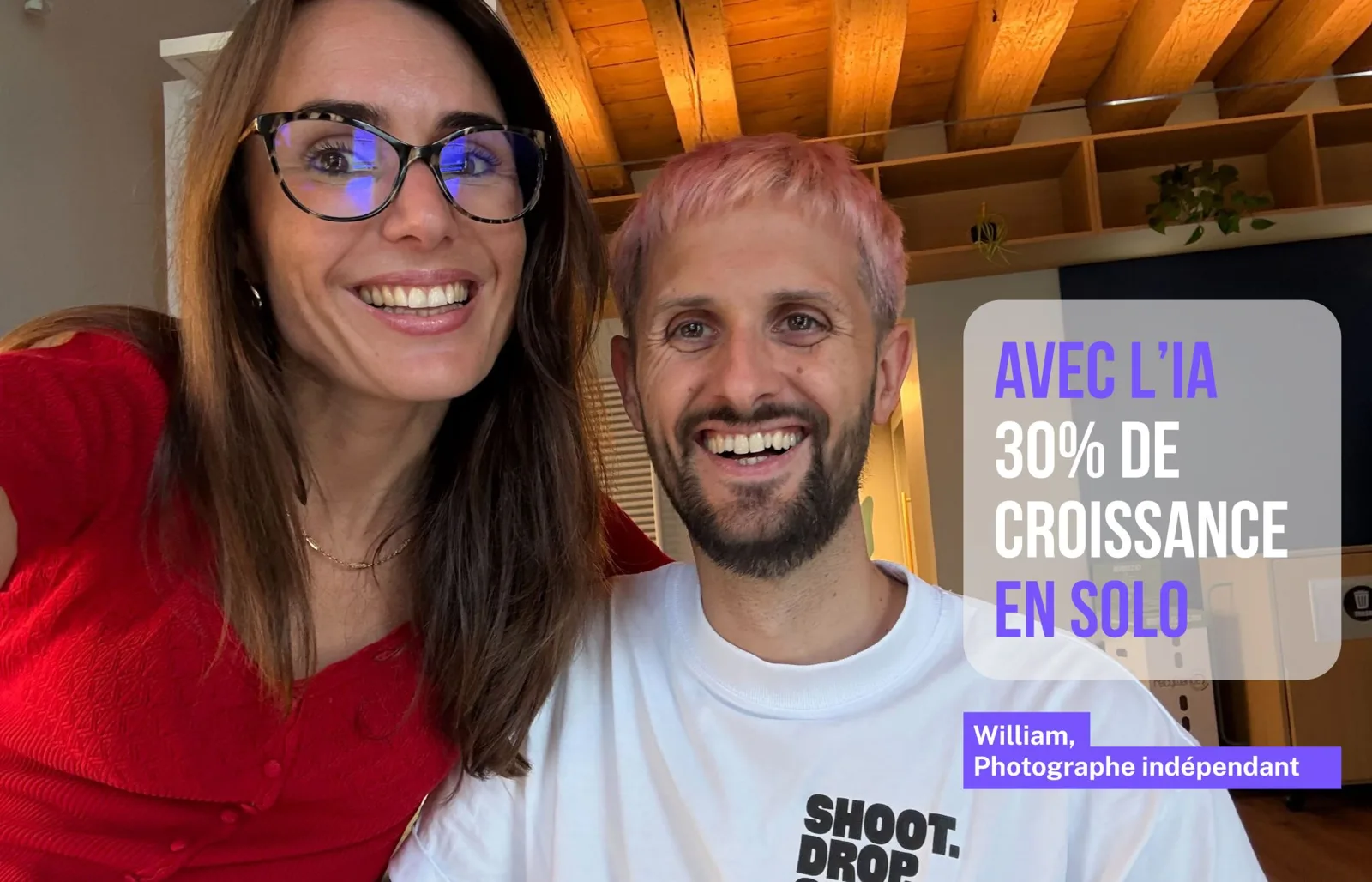
I recently had the pleasure of joining the Edison IA podcast to discuss the impact of AI on the photography profession and to share my view of what tomorrow’s photographer will look like as artificial intelligence arrives. Enthusiastic and optimistic, I am convinced that AI is a real opportunity for photographers who are willing to use it.
The uncomfortable truth
I’ll be blunt: most event photographers are lying to themselves.
They spend hours at the computer polishing their images, retouching details nobody will ever notice. I call it the artist-photographer syndrome: taking pictures more for yourself than to serve your client.
The reality, which many refuse to admit, is that event photography has become a short-lived product. It is not art destined for a gallery wall. It is content destined to be shared, liked, commented on… and then forgotten.
I am not saying you can’t have an eye and an artistic signature. On the contrary, that is what gives us our value. But you have to strike a balance, come back down to earth and accept an uncomfortable truth: in event photography, the moment is worth more than technical perfection.
The most beautiful photo in the world, edited for an hour but published three days after the event, will have less impact than a photo published at the right time, while people are still paying attention and the emotion of the event is still there.
A few years ago I asked clients and event organisers a very simple question, and I invite you to ask your clients, or yourself, the same: “What do you do with the edited high-resolution photos you receive after the event?”
Unsurprisingly, 90% admit they never use them. They end up on a server, in an “Event archive 2025” folder that will never be opened again. Apart from 5 to 10 photos, those images never see the light of day. All those hours spent editing hundreds or even thousands of images serve no purpose. In today’s economy, that is good for neither the organiser nor the photographer.
The photos that get used and shared with attendees, the ones that drive engagement and truly serve communications, are always the ones published live from the event.
In a fast-moving world we are swamped with information and quickly move on. By the next day the event’s time has passed and we have no attention to spare. What will make photographers disappear is not generative AI or any other revolutionary technology, but their failure to adapt to new habits and new ways of consuming media.
And in that context, AI is a real ally!
AI: an assistant, not a replacement
My deep conviction is that AI will not replace event photographers. Why? Because in B2B event photography, what we sell is authenticity and emotion.
Organisers and attendees don’t want AI-generated photos. They want to see their real colleagues, their real partners, the real atmosphere of their event.
We are also seeing a wonderful paradox: the more AI-generated content there is, the more value a genuine, unpolished photo gains. In reaction to all the generated images, people are looking for authenticity. It is no accident that the SOOC (Straight Out Of Camera) trend is growing.
So day to day I use AI to help with repetitive, time-consuming, low-value tasks while I concentrate on what matters: taking photos and looking after my clients.
A measured use of AI
AI draws criticism and raises all sorts of ethical, environmental and legal questions. The debate is no longer whether to use AI, but how to use it responsibly.
In building Pixilive, I wanted a tool that reflects my view of the job and my values:
- Simple automatic corrections: AI improves brightness, contrast, white balance and noise without distorting the original image or the photographer’s intention. Nor did I want an AI trained on photographers’ pictures and hungry for resources
- No facial recognition: no use or storage of biometric data, out of respect for the personal data of the people photographed.
- No gimmick AI: measured use of AI in the service of users
I believe in an ethical use of AI that serves people, not the other way round.
The win-win of AI as an assistant
I made this bet several years ago: to use AI as an assistant, to be open about it with my clients, and to adapt my job rather than have change done to me.
The result: everyone wins.
My clients can communicate in real time during their events, keep partners loyal and engage attendees. They get a service suited to their actual needs and budgets.
As a photographer I have gained time, clients, profitability and above all meaning. I concentrate on what I love: being on the ground, capturing the moment and supporting my clients.