
The MementoPhoto.AI alternative, with no account and no selfie
MementoPhoto.AI, also known as Memento.photo, has built its photo delivery app around facial recognition. Pixilive is the photo partner for professional events: from taking the pictures to getting them seen, without exploiting any personal data.
- Published prices
- Live since 2013
- No data collection
In short
MementoPhoto.AI is a French platform for sharing event photos. It uses facial recognition to send each person the photos they appear in. To get them, attendees scan a QR code, take a selfie, create an account with their email address and agree to the use of their biometric data. Memento reports more than 7,500 events, from company seminars to major sporting events.
Pixilive focuses on the people who matter most to an organiser: speakers, partners and VIP guests. The attendee experience counts, of course, but what is really at stake is elsewhere: freeing your team from sorting and sending photos to each person, and getting images out faster so the event is seen.
Pixilive also chooses data protection by design: no account, no selfie, no data collected. What is never collected never needs protecting.
5 reasons to choose Pixilive
- #1
Speakers get their photos without lifting a finger
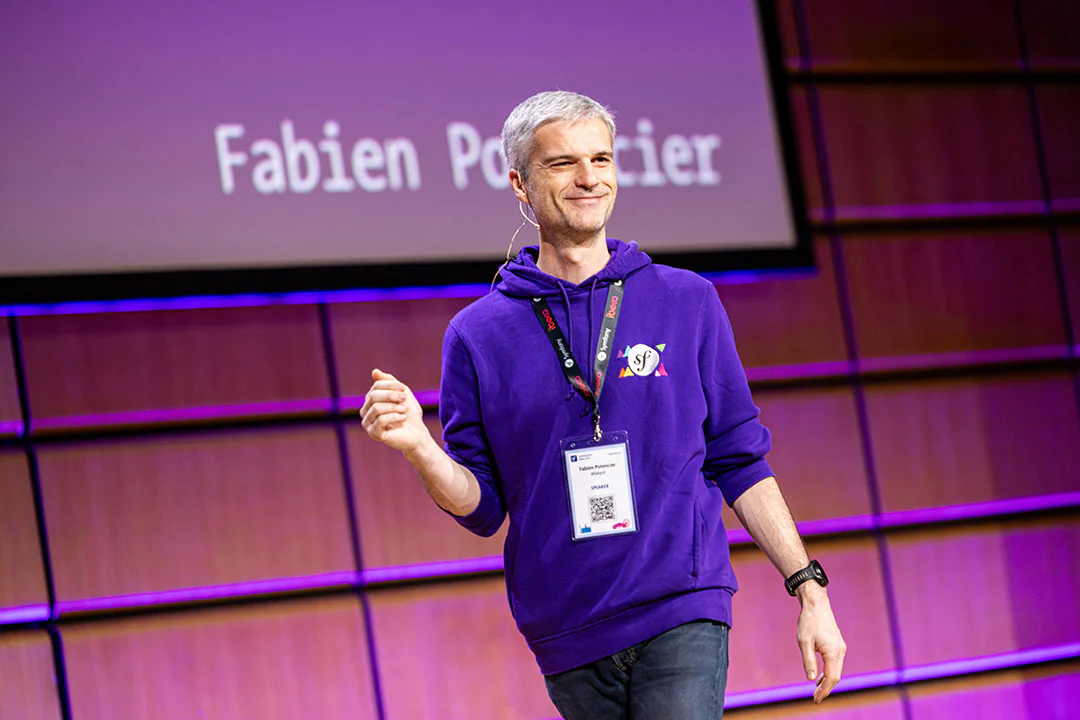
Their photos arrive by email as soon as their session ends.
- Memento
- To find their photos, each person creates an account, takes a selfie and accepts facial recognition. Plenty of friction to put people off.
- Pixilive
- We schedule photo emails to speakers from your programme. At the end of each talk, the speaker receives their photos, picked by the photographer and sent automatically.
- #2
Everyone finds what they are looking for
A session, a speaker, a partner: found in seconds.
- Memento
- Photos are filed in two folders: “General” and “My photos”.
- Pixilive
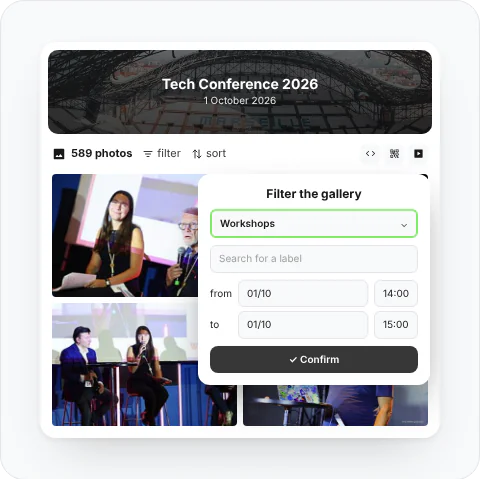
- Photos are in chronological order, time-stamped, filed in folders and labelled. A session, a speaker or a partner can be found in seconds, even among thousands of photos.
- #3
Photos ready to publish
Images edited on arrival, ready to share.
- Memento
- Photos are published as they are sent: straight from the camera, or edited beforehand by the photographer, who then has to go through a computer.
- Pixilive
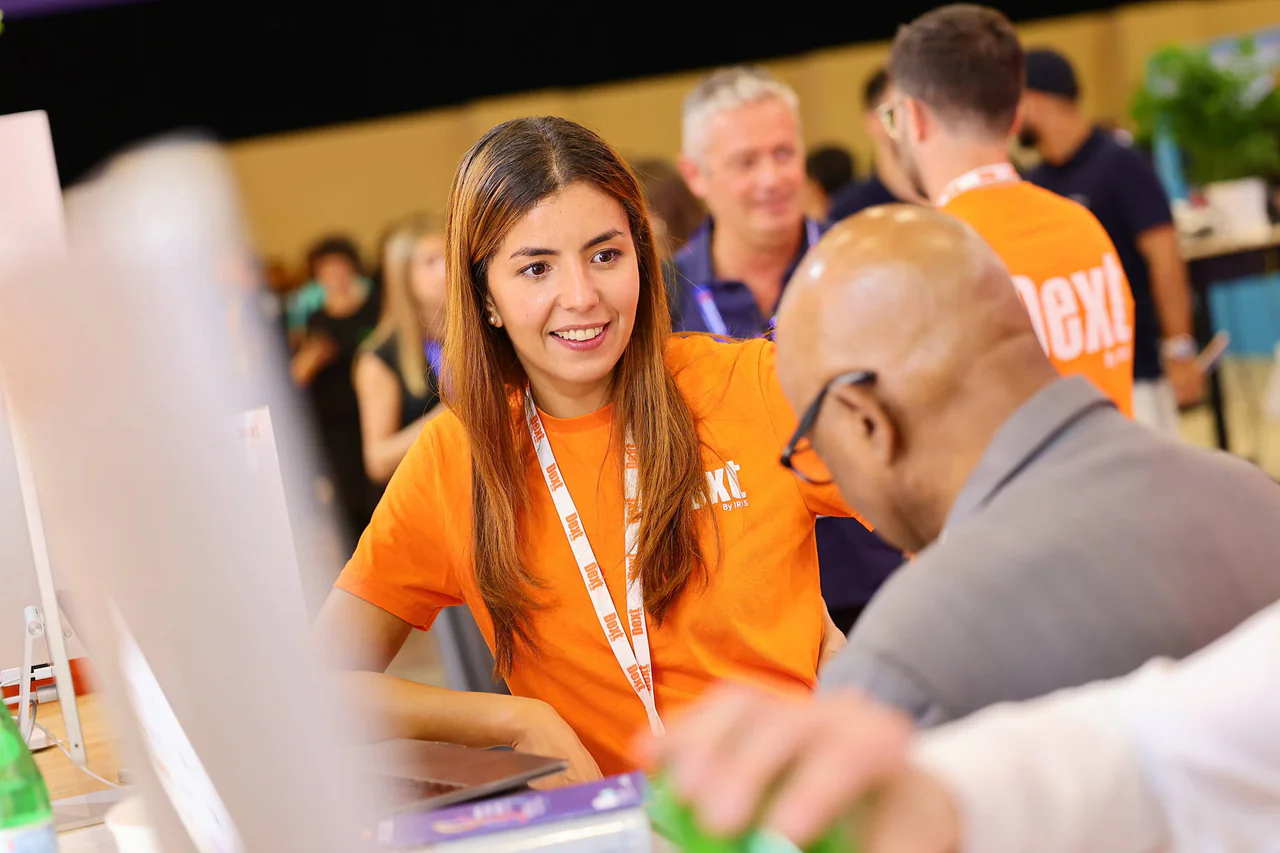
- The photographer sends photos straight from the camera over FTP, with no detour through a computer. Each one is edited automatically on arrival: light, contrast, colour, event logo and social media formats. A light edit that doesn’t replace the photographer’s eye, but speeds up the flow and improves what gets published. Photos also appear live in a slideshow, with a QR code leading to the gallery.
- #4
An excellent adoption rate
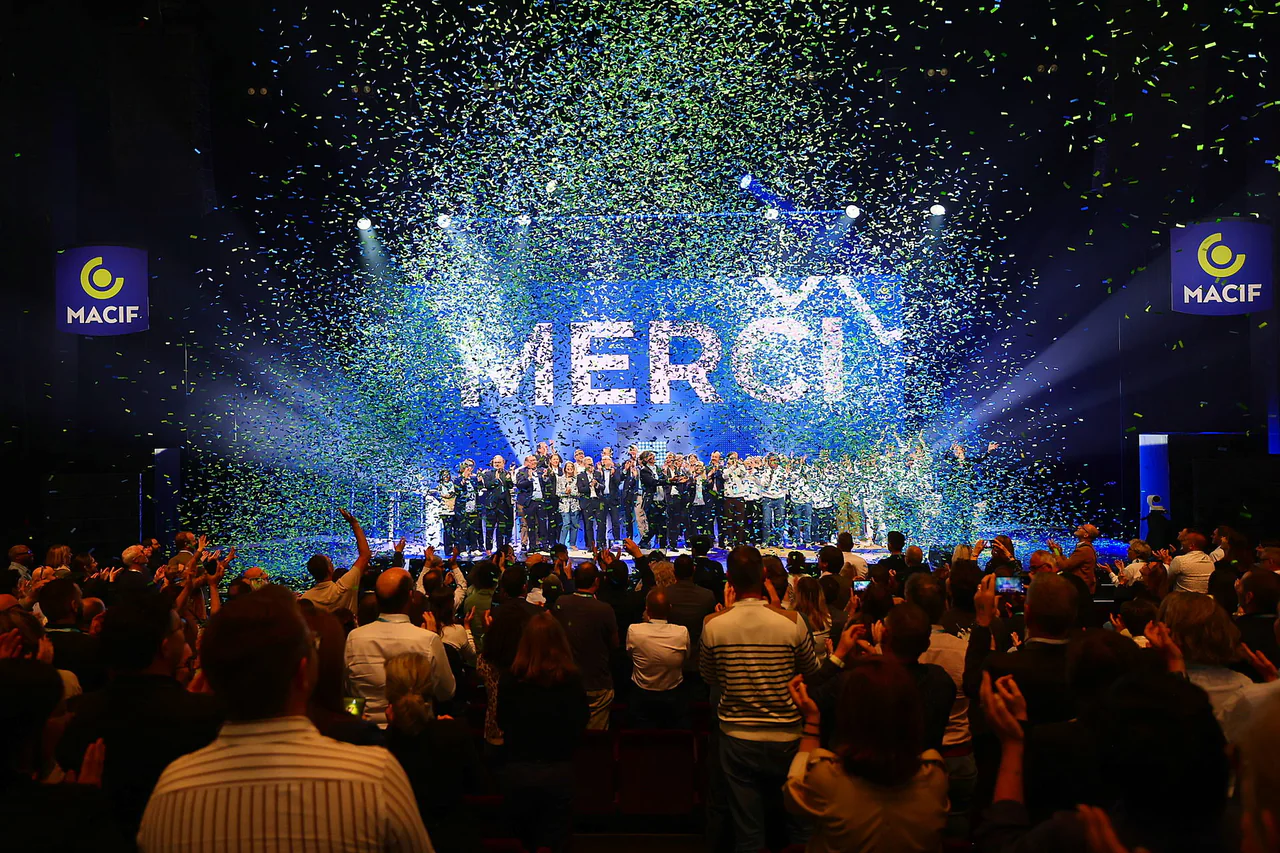
One link is enough: the easier the access, the further photos travel.
- Memento
- Creating an account, taking a selfie and waiting for processing before reaching the gallery is a long way round. And if, after all that, the system finds you in no photo at all, disappointment is guaranteed.
- Pixilive
- No account to create to collect the photos from a single event. Share the gallery link: your attendees browse, download and share whichever photos they like. Personal photos are published in individual spaces, again with no account, no app and no compulsory data.
65%average adoption rateGallery visitors compared with the number of attendees. - #5
No customer data
Your attendees’ and partners’ data is none of our business.
- Memento
- Their privacy policy refers to “mathematical representations computed for the faces detected in event photographs” (our translation from the French version), including for people who have neither registered nor given consent.
- Pixilive
- No facial recognition, no selfie, no account, and not even tracking cookies. Pixilive chooses digital restraint.
What Pixilive collects about your attendees by default- No name
- No email address
- No biometric data
- No tracking cookie
Memento or Pixilive, point by point
Comparison compiled on 27 November 2026 from information published by Memento. “Not stated”: information not found on their website.
Where Memento is strong
A polished attendee experience
For an attendee, finding all their photos among thousands from a single selfie is a pleasant experience.
Compartmentalised galleries
Each attendee sees only the photos they appear in, and not other people’s. An approach that protects everyone’s privacy.
Proven technology
Their facial recognition is reliable: it finds a person even when tiny, in the middle of a crowd shot.
The differences in detail
An attendee experience, or distribution that serves the event
Memento.photo takes care of the attendee experience: one selfie, and their photos arrive in a gallery that belongs to them alone. At a photo call or an activation, it works well.
Pixilive starts from what the organiser needs. At a conference, trade show or convention, speakers want their photos to share their talk, partners want proof of their visibility, the communications team needs images during the event, and a picture library is needed to announce the next edition. Hence a gallery organised by folders, labels and time slots, scheduled emails at the end of each session, and a report with figures to measure what the photos achieved.
Privacy protected by sorting, or by having no data
Memento.photo protects privacy by compartmentalising: each person sees only the photos they appear in. The approach holds up, but it means collecting an email address and a selfie, and analysing the faces in the photos to do the sorting. The organiser remains responsible for it.
Pixilive starts from the opposite principle: the best protection is to collect nothing. The gallery opens from a link, with no account and no selfie, and anything that should stay personal goes into individual spaces, opened with a QR code. Under the UK GDPR, biometric data used to identify someone is special category data, and the ICO expects a suitable alternative for people who choose not to consent. For an organiser, less data also means less responsibility.
Photos that work for your event
Pixilive is the photo partner for professional events, from taking the pictures to getting them seen. Our job isn’t recognising faces: it’s getting your event noticed. Photos published while it is happening, sent to the right people, shared without friction and measured in a report. All with no account, no selfie, and no data collected about your attendees.
In summary
Choose MementoPhoto.AI if…
- Your event is first and foremost entertainment: photo call, party, attendee experience.
- Each attendee should find their own photos, without seeing other people’s.
- Your attendees are happy to create an account and send a selfie.
Choose Pixilive if…
- Your speakers and partners should receive their photos without having to ask.
- The photos feed your event communications, during and after.
- Your attendees should reach the gallery from a simple link.
- You don’t want to collect any data about your attendees.
Frequently asked questions
Does Pixilive use facial recognition?
No, by choice. Photos are filed in folders and labels and sent to speakers by email, and personal photos go into individual spaces opened with a QR code.
How does an attendee find their photos without a selfie?
They open the gallery with the link or QR code, and filter by room, time or partner. For personal photos, such as a photo call, they open their individual space with a QR code, with no account.
Can we switch from Memento to Pixilive for the next edition?
Yes. Working from your programme, we set up the gallery, labels and speaker emails, and we arrange the photographers. There is nothing to migrate: each edition has its own gallery.
Do you provide photographers?
Yes. Our partner photographers are recruited, briefed and supported by Pixilive, and are well practised in live delivery. For events outside France they travel to you, with travel costs quoted upfront, and they work in English.
Can Pixilive be integrated into our event app?
Yes, the gallery can be embedded in a page of your website or in your event app.
Ready to try something different?
A no-obligation demo on a real event gallery, to see how Pixilive fits your programme.
Sources, accessed 27 November 2026: Memento website · Memento privacy policy, French version (dated 29 October 2026) · ICO guidance on biometric data.